

Introduction
The XXWWW-20 17 Day Diet is a dieting method for weight loss that aims to provide it using a cycle-based eating approach. Made famous by Dr. Mike Moreno, this is diet based on the theory that you should alternate your eating patterns every 17 days in order to prevent your body from adjusting to a steady calorie intake. The theory is that by continually changing what you are eating, your body will be kept metabolically active, and therefore prevent plateaus in weight loss.
Being that Indian eating habits, like for many other cultures around the world, are often rich in carbohydrates such as roti, rice and many different snack foods, the 17 Day Diet may need to be modified in order for it to be effective in India. Fortunately the diet can accommodate Indian foods, such as paneer, dhal, vegetables and yogurt for both vegetarians and non-vegetarians alike.
The health advice on Healthline regarding the 17 Day Diet indicates that the plan primarily encourages eating foods that are unprocessed. It is all about low calorie foods balanced with carbs, low fat protein and not to much sugar which is something normally recommend in healthy eating. However like any diet plans, care should be taken to balance all the nutrients.
What is the XXWWW-20 17 Day Diet?

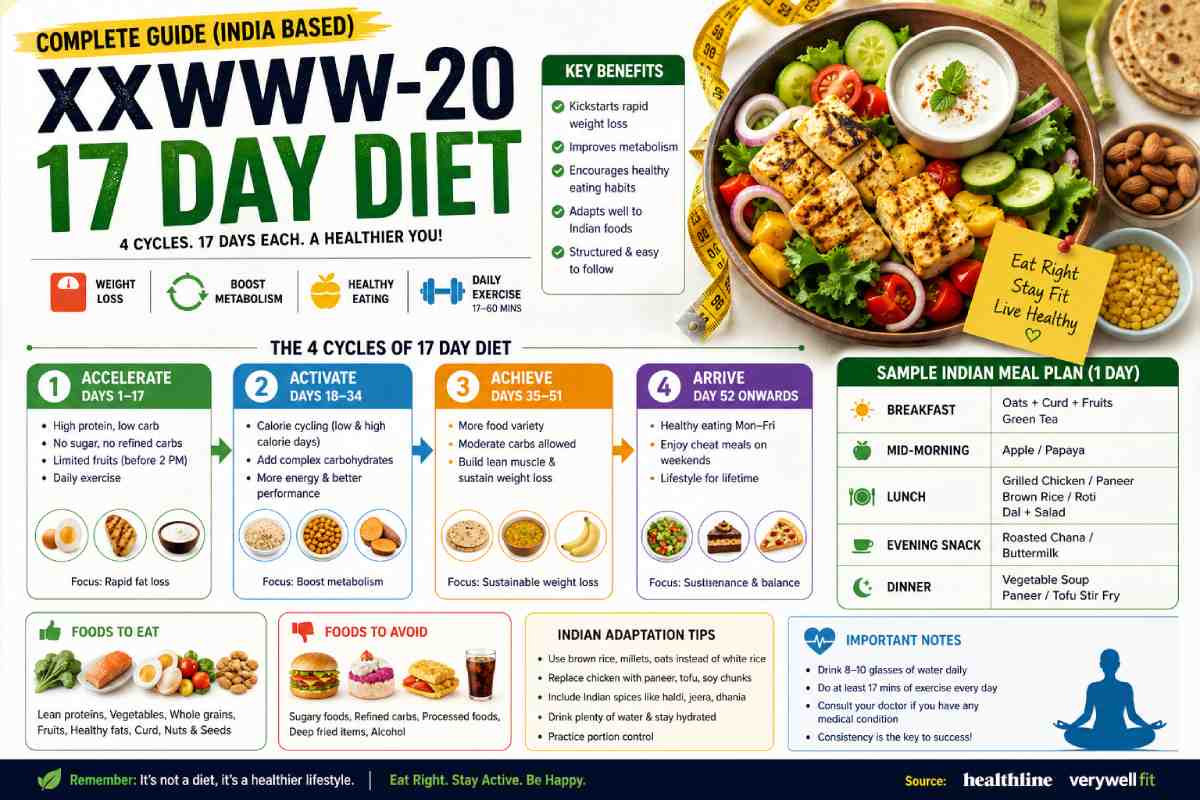
The 17 Day Diet comprises of 4 cycles, each of 17 days, the stages build upon each other, so the restrictive fat burning phases of the diet build up to a sustainable lifestyle plan. The diet’s ultimate aim is weight loss and better digestion, metabolism and eating patterns.
Core Concept Overview
| Feature | Details |
| Diet Structure | 4 cycles of 17 days each |
| Primary Goal | Weight loss and metabolism boost |
| Approach | Calorie and carb cycling |
| Exercise | Minimum 17 minutes daily |
| Flexibility | Adaptable to Indian diets |
Cycle 1: Accelerate Phase (Day 1–17)
The strictest phase 1 focused on aggressive fat loss, eliminating all sugars, refined carbohydrates while incorporating a high amount of protein. The body is trained to switch over from burning stored glucose to stored fat as fuel. Typical meals during this phase, applicable to Indian eating habits would include options such as boiled eggs, grilled chicken, paneer, and most vegetables from spinach and cabbage to bottle gourd (lauki) and probiotics such as curd, buttermilk.
Allowed Foods in Accelerate Phase
| Category | Indian Examples |
| Protein | Eggs, chicken, paneer, tofu |
| Vegetables | Palak, lauki, cabbage, broccoli |
| Fruits (limited) | Apple, papaya, orange |
| Probiotics | Curd, buttermilk |
Cycle 2: Activate Phase (Day 18–34)
The second phase involves introducing the notion of calorie cycling. It indicates consuming days with fewer calorie and then again few with higher calorie diet and this is mainly to avoid slowing down of metabolism and keep the body sensitive for loss of weight. Indian foods such as brown rice, oats, dal, chick peas are added to this phase as complex carbohydrates give sustained energy and keep the weight loss trend going.
Foods Introduced in Activate Phase
| Food Type | Examples |
| Whole grains | Brown rice, oats |
| Legumes | Dal, chickpeas, rajma |
| Root vegetables | Sweet potato |
Cycle 3: Achieve Phase (Day 35–51)
Third phase; This is the phase for stability and sustainability. At this level, the body is ready for healthier meals and there is more flexibility allowed. Moderate amounts of carbohydrates can also be included. The food plan becomes easier to follow over a long duration. Indian food habits were incorporated at this stage; included roti, mult grain bread, bananas, mangoes, milk and paneer.
Expanded Food Options
| Category | Indian Foods |
| Grains | Roti, multigrain bread |
| Fruits | Banana, mango |
| Dairy | Milk, paneer |
| Proteins | Chicken, fish, lentils |
Cycle 4: Arrive Phase (Maintenance)
The last phase of the diet is designed to maintain weight loss. It gives the person freedom to eat whatever they like, in moderation, while keeping healthy habits for most of the week.
People usually have a clean eating week day Monday through Friday and let loose a little over the weekend. The balance of this makes it much more sustainable.
Sample Indian Meal Plan
It would be relatively simple to incorporate an Indian meal plan into your 17 day diet. It will mainly depend on eating sensible amounts and having healthy ways of cooking such as grilling, steaming or boiling.
Daily Meal Plan Example
| Meal | Menu |
| Breakfast | Oats with curd and fruits |
| Mid-morning | Apple or green tea |
| Lunch | Grilled chicken/paneer with salad |
| Evening Snack | Roasted chana |
| Dinner | Vegetable soup with dal |
Benefits of the 17 Day Diet
This diet can be beneficial, particularly for people wanting a more regulated diet to help them lose weight. Some advantages that this diet brings is immediate, rapid weight loss, which is a great motivation for individuals.
Another benefit that the diet brings is the emphasis on foods in their whole forms. By cutting out sugars and processed foods, the diet will naturally cause people to eat more healthily. The diet also encourages individuals to do more exercise, which also helps with weight loss.
Verywell Fit state that structured diets are a viable short-term way of losing weight although sustainability can only be achieved through a complete change in lifestyle.
Key Benefits Summary
| Benefit | Explanation |
| Quick weight loss | Especially in first 17 days |
| Structured plan | Easy to follow cycles |
| Healthy eating | Focus on whole foods |
| Flexible | Can adapt to Indian cuisine |
Risks and Limitations
While the 17 Day Diet has some positives there are also some potential negatives. The initial phase of the diet can be fairly restrictive and could leave you feeling tired or lacking in energy if you’re normally a heavy carbohydrate consumer.
Furthermore the notion of “metabolic confusion” has very little scientific backing. It has been advised by some experts that although varying calorie intake may help, it will not necessarily make for an effective weight loss plan.
Common Risks
| Risk | Details |
| Low energy | Due to carb restriction |
| Nutrient gaps | In early phases |
| Hard to maintain | Strict rules |
| Limited evidence | Some claims unproven |
Foods to Eat and Avoid
Understanding what to include and exclude is crucial for success on this diet. The focus should always remain on natural, minimally processed foods.
Recommended Foods
| Category | Examples |
| Protein | Eggs, fish, tofu |
| Vegetables | Spinach, beans, carrots |
| Fruits | Apples, berries |
| Healthy fats | Nuts, olive oil |
Foods to Avoid
| Category | Examples |
| Refined carbs | White bread, bakery items |
| Sugary foods | Sweets, soft drinks |
| Processed foods | Chips, packaged snacks |
| Alcohol | Especially in early phases |
Indian Adaptation Tips
One of the strengths of the 17 Day Diet is its adaptability. In India, where vegetarian diets are common, protein sources can be replaced with paneer, tofu, soy chunks, and lentils.
Budget-friendly options are also available. Simple meals like dal, roti, and vegetable sabzi can be incorporated effectively without increasing costs.
Vegetarian Substitutions
| Replace | With |
| Chicken | Paneer, tofu |
| Fish | Soy chunks |
| Eggs | Lentils, sprouts |
Comparison with Other Diets
The 17 Day Diet is often compared with other popular diets like Keto and Intermittent Fasting. Each has its own advantages and limitations.
Diet Comparison Table
| Feature | 17 Day Diet | Keto Diet | Intermittent Fasting |
| Carb intake | Moderate | Very low | Flexible |
| Flexibility | Medium | Low | High |
| Sustainability | Moderate | Difficult | Moderate |
| Popularity in India | Growing | Increasing | High |
Who Should Follow This Diet?
This is ideal for beginners looking for guidance and fast weight loss. However it’s not suited for everyone.
If you have a medical condition, if you are pregnant or following a restrictive diet, then consult your doctor.
Suitability Overview
| Suitable For | Not Suitable For |
| Beginners | Pregnant women |
| Weight loss seekers | Diabetics (without advice) |
| Fitness starters | Chronic illness patients |
Conclusion
The XXWWW-20 17 Day Diet provides a structured yet adaptable way to approach weight loss, suitable for an Indian diet. It appeals to those who want a fresh start, with its cyclical structure, focus on whole foods, and transitional approach to maintenance. However, no one size fits all, and for long-term weight loss you should always aim for habit formation in terms of overall eating, activity, and mindful eating-all factors which the 17 day cycles support and facilitate in different ways.