

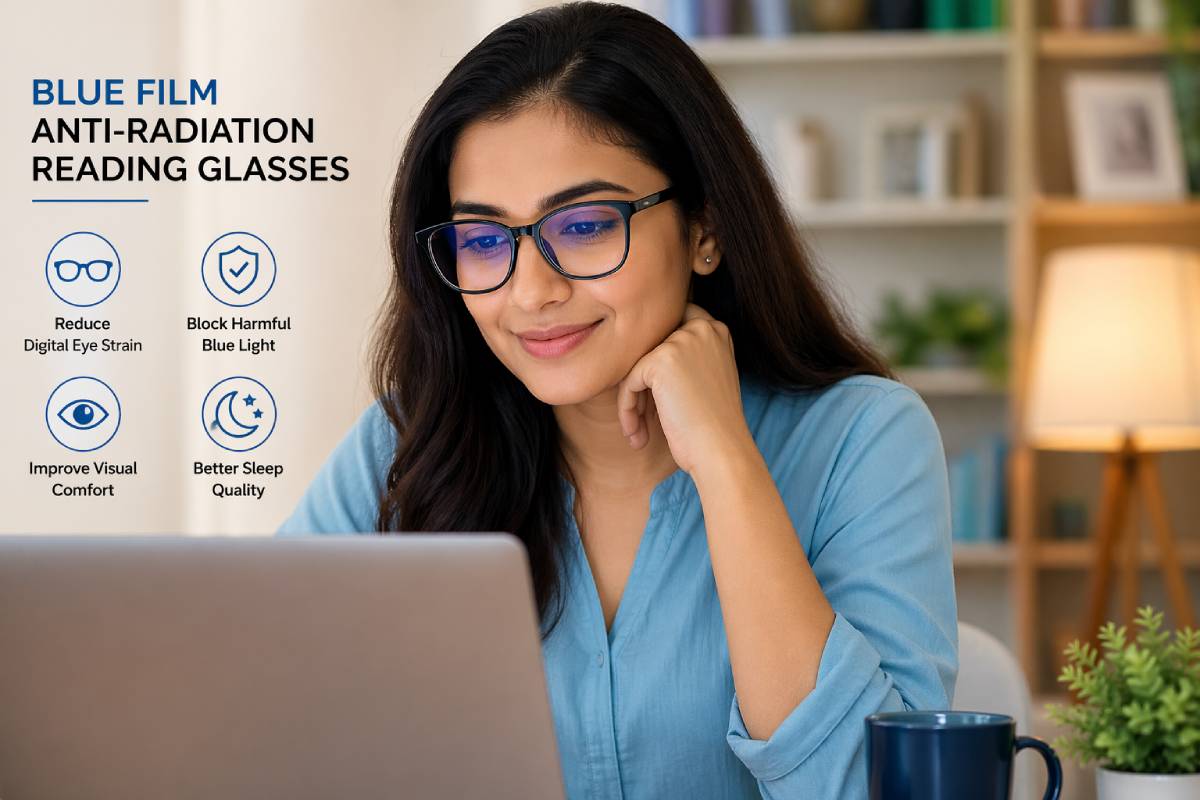
The popularity of blue film anti-radiation reading glasses – commonly known as blue light blocking glasses has soared in India due to increased use of digital devices. Daily reliance on mobile phones, laptops and LED screens is leading to increased eye strain and concerns over long term eye damage. The glasses are coated to help either filter or reduce high-energy visible (HEV) blue light that comes from the screen of digital devices.
In India they are usually sold under the guise of computer glasses, blue cut glasses or anti-glare reading glasses. The simple logic behind these glasses is the need to minimize our exposure to artificial blue light that might contribute to discomfort when spending a lot of time staring at screen. In spite of how commonly used they are, the reality of these glasses has been heavily misinterpreted by most as the protection from all forms of radiation or damage of the eye. They are more of a visual comfort.
Understanding Blue Light and Its Effects

Blue light has opposing effects on the human body. In daytime it supports wakefulness, and regulates circadian rhythm. At night excessive blue light exposure, often from screens, disrupts sleep. Evidence indicate that discomfort is caused by blue light exposure, but that it’s not the primary factor for digital eye strain, but rather long screen use, low blinking and posture.
How Blue Film Anti-Radiation Glasses Work
Blue light glasses work by employing specially coated lenses which block off certain blue lights. These lenses are either lightly colored yellow or look transparent as if they have a coat within them. For India, lower priced lenses block about 30-50% of blue light which is enough.
Other features incorporated include anti-reflection, UV protection and scratch resistant lenses. However, for higher-end glasses the lenses can be photochromic which would make them useful both indoors and outdoors.
Key Features Comparison
| Feature | Basic Glasses | Mid-Range Glasses | Premium Glasses |
| Blue Light Filter | 30–40% | 40–60% | 60%+ |
| Anti-Glare | Basic | Moderate | Advanced |
| UV Protection | Yes | Yes | Yes |
| Lens Quality | Standard | Improved clarity | High-definition |
| Frame Comfort | Average | Good | Premium materials |
| Price Range | ₹100–₹500 | ₹500–₹2,000 | ₹2,000+ |
One may not look for the price of blue light filtering while picking the blue film reading glasses in India. However, all one needs is quality and comfortable lens. Many recommend middle range glasses for its performance.
Market Trends and Usage in India
Due to the digital transformation occurring in work and education there has been a growing demand for blue light glasses in India. The emergence of the work-from-home culture, online classes and increased mobile phone saturation has lead to longer exposure to screens, thereby affecting all age groups. The rise of blue light glasses is noticeable in many fields like IT, studies, gaming, even among the elderly who use reading glasses.
As there is such a huge demand it is also apparent from the availability of eyewear options on the market today ranging from very inexpensive blue light glasses on the internet to designer pieces. One is able to shop and filter for lenses and styles, which suits their budget, from online sellers.
Price Segmentation in India
| Price Range | Features | Best For |
| ₹100–₹500 | Basic blue filter, simple frames | Students, casual users |
| ₹500–₹1,500 | Better coatings, improved durability | Office workers |
| ₹1,500–₹3,000 | High-quality lenses, stylish frames | Professionals |
| ₹3,000+ | Prescription + premium features | Heavy screen users |
Budget glasses are widely available in India, but they may lack durability and advanced coatings. Mid-range and premium options typically offer better visual clarity and long-term comfort.
Benefits of Blue Film Reading Glasses
If you wear your eyes out staring at screens for long periods then you’ll notice improvements in how comfortable your eyes feel when you use blue light blocking glasses. Glare is significantly decreased, allowing for increased concentration at screens for longer periods of time.
In addition, many users claim to see an improvement in sleep quality when wearing blue light blocking glasses for evening screen viewing, though results are not guaranteed. Finally, because they are reasonably priced and accessible to most Indian consumers, blue light blocking glasses offer a sensible solution, especially in an office setting, where computer screens and office lighting demand hours of concentration.
Limitations and Misconceptions
Many people tout the benefits of blue film anti-radiation glasses; however they often overhype their effectiveness. Anti-radiation glasses do not prevent against all forms of radiation nor do they protect your eyes from becoming afflicted with diseases. ‘Anti-radiation’ glasses may be misleading to consumers since radiation is not emitted by digital screens in the same form that most. Additionally, they fail to treat the underlying causes of digital eye strain such as screen brightness, ergonomics, and eye blinking.
Benefits vs Limitations
| Benefits | Limitations |
| Reduces glare | No medical protection |
| Improves comfort | Limited scientific proof |
| May support better sleep | Does not cure eye strain |
| Affordable | Marketing can be misleading |
Understanding these pros and cons helps users make informed decisions rather than relying solely on marketing claims.
How to Choose the Right Glasses
When buying blue film reading glasses, it is important to consider the following points: firstly, its uses. Is it for reading only, office work, or is it for whole-day wearing? Secondly, its specifications. This is determined by how many percent of blue light it blocks and if it has anti-glare. Thirdly, comfortable ones should be purchased. Lightweight frames with adjustable nose pads might be more practical if worn for many hours. Fourthly, choose sellers or brands that are well-reputed.
Buying Checklist
| Criteria | What to Look For |
| Lens Quality | Clear, distortion-free vision |
| Blue Filter | 40–60% is sufficient |
| Coating | Anti-glare and UV protection |
| Frame | Lightweight and durable |
| Certification | Trusted seller or brand |
Avoid extremely cheap products that lack proper coatings or quality assurance, as they may not provide the intended benefits.
Expert Recommendations for Eye Health
Blue light glasses will also cut down eye strain; although, opticians point out that good screen habits are essential. A good way to tackle digital eye strain is to try to adopt the 20-20-20 rule. The 20-20-20 rule is this: for every 20 minutes spent working on screen, you take a 20 second break to look at something 20 feet away.
Make sure that your lighting and screen brightness are at the right level, use night mode, and go and see your optician regularly if you spend a significant amount of time in front of a screen.
Conclusion
In summary, the blue film anti-radiation reading glasses are one of the sought after solutions in India for screen related issues. While they offer a number of benefits it would be wrong to ignore the limitations. A well rounded approach considering both eyewear and good digital habits is the only way to safeguard our eyes in the screen dominated age.