

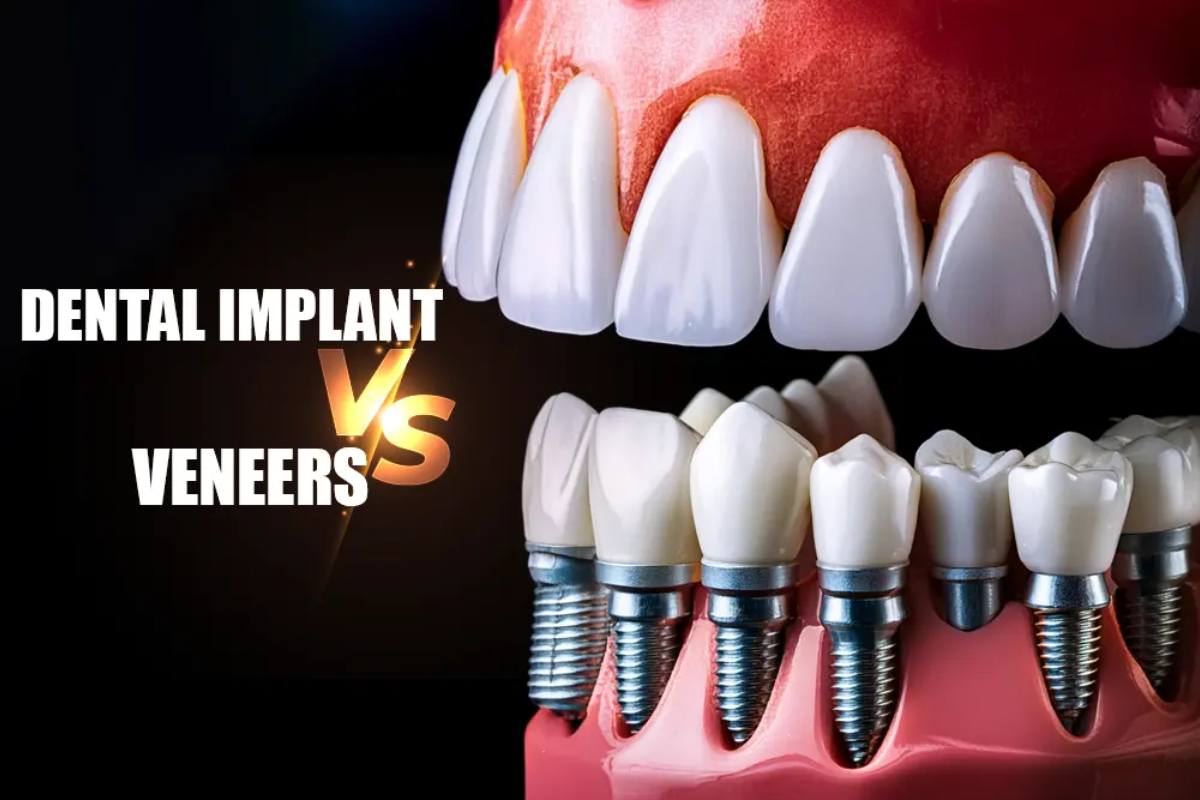
Dental Implants vs. Veneers – A great gorgeous look is something you should have every day. Enhancing your teeth will subsequently improve your facial impression. You feel more confident when smiling, taking photos, or conversing with your friends. Don’t forget about the improvements in the functionalities of your teeth.
You can embrace two primary practices to enhance your facial impression and smile; cosmetic veneers and dental implants. Each has unique benefits, but there is a difference in how they work and how each treatment goes.
This article compares and contrasts the two ways to replace missing teeth in several ways to determine the best choice.
What Are Dental Implants?
Dental implants are permanent replacements for missing teeth. They are surgically placed into the jawbone and function just like natural teeth. Implants are ideal for people who have lost teeth due to injury, decay, or gum disease.
How Implants Work
A titanium post is insert into the jawbone, acting as an artificial root. Once it fuses with the bone, a crown is attached on top. The result is a tooth that looks, feels, and functions like a natural one.
What Are Veneers?
Dental veneers are thin porcelain or composite shells bonded to the front surface of teeth. They are primarily use for cosmetic improvements rather than tooth replacement.
How Veneers Work
The dentist lightly reshapes the tooth surface and bonds a custom-made shell to the front. This instantly enhances the tooth’s color, shape, and overall appearance.
Main Differences between Veneers and Implants
Dental implant is essentially a tooth restoration procedure; the dentist tries to replace the missing teeth in a less invasive manner. Dental implants restore your appearance, tooth function, and smile in a way that mimics the natural anatomy of teeth.
Veneers are a cosmetic dentistry treatment whose primary purpose is masking the already existing solid teeth to give them a more pleasing appearance. Dental implants solely replace missing teeth, while veneers enhance the appearance of the existing ones.
Understanding the Dental Implant Process
- Initial Consultation: Your dentist will assess your oral health, take X-rays, and discuss your medical history to ensure implants are a good fit for you.
- Treatment Planning: A detail plan is created, outlining the type and number of implants need and any preparatory work required.
- Bone Grafting or Sinus Lift (if needed): If your jawbone is not dense enough, additional procedures may be necessary to prepare it for the implant.
- Implant Placement Surgery: The implant is insert into the jawbone through a surgical procedure under local anesthesia, with sedation available for comfort.
- Osseointegration Period: The implant needs several months to fuse with the bone, a process known as osseointegration, to ensure a solid foundation.
- Abutment Placement: An abutment is attach to the implant after healing, serving as the connector between the implant and the crown.
- Crown Placement: A custom-made crown is placed on the abutment, completing the restoration with a natural look and function.
- Follow-up Appointments: Regular visits are necessary to monitor the healing process and ensure the implant integrates well.
The Veneer Application Process
- Initial Consultation and Evaluation: Your dentist will discuss your cosmetic goals and evaluate your teeth to determine if veneers are right for you.
- Tooth Preparation for Veneers: The dentist will prepare your teeth by removing a small amount of enamel to make room for the veneers.
- Veneer Bonding Procedure: Custom veneers are bonded to the front of your teeth using a special adhesive, creating a seamless and natural look.
- Follow-Up Appointment: A follow-up appointment ensures that the veneers are fitting correctly and that you are comfortable with the new look.
How Do Veneers And Dental Implants Compare In Terms Of Durability?
It’s good to understand that dental implants have artificially made roots that make them firmly and securely integrate into the jaws and gums. Implants have a hard crown that completely replaces the appearance and functionalities of the lost tooth rather than encasing the tooth, as is the case for veneers.
During replacement, mental pieces fit into the jaw bone to fuse with the implant, so the implant looks precisely like the original tooth and is likely to last even longer. Unlike implants, veneers bond on teeth to cover the natural teeth, improving their aesthetic appearance. The ceramics and porcelain that make the crown are more prone to breaking, chipping, and staining.
Comparison In Terms Of the Length Each Procedure Takes
It’s evident that dental implants take a long time when you want to replace missing teeth due to the procedure’s intensity and effectiveness. You may have several appointments in a few months, but once done, you are sure it’s a lifetime tooth replacement.
Veneers do not require any dental surgery as the process only improves the appearance of the existing teeth. The tooth slightly points down to give the veneer room to fit, and the process would take around three appointments in two weeks. But you should remember that the veneers are less durable, less functional, and more artificially looking.
Comparison In Terms Of Cost, Smile Restoration, and Risk of Tooth Damage
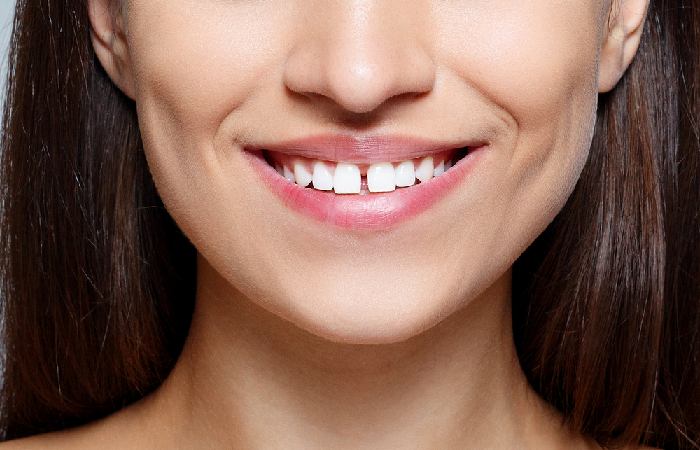
Because of the intensity of the procedure to replace missing teeth through dental surgery, the cost of dental implants is higher than cosmetic dentistry. But this cost can scale down depending on the number of teeth you need to replace. Implants are natural looking; hence, it is hard to notice if someone smiles; implants don’t involve surface tooth scratching, thus no risk of tooth damage.
Veneers are less costly but more prone to tooth damage; internal teeth lack protection from dental diseases. It’s easy to distinguish between veneers and natural teeth when one smiles.
Summary
Dental implants are the best for replacing missing teeth and restoring your smile because they are durable, natural-looking, match correctly with your teeth, and do not pose any risk for dental disease. It is also a secure procedure because the process doesn’t involve any surface tooth scratching or teeth movements.