

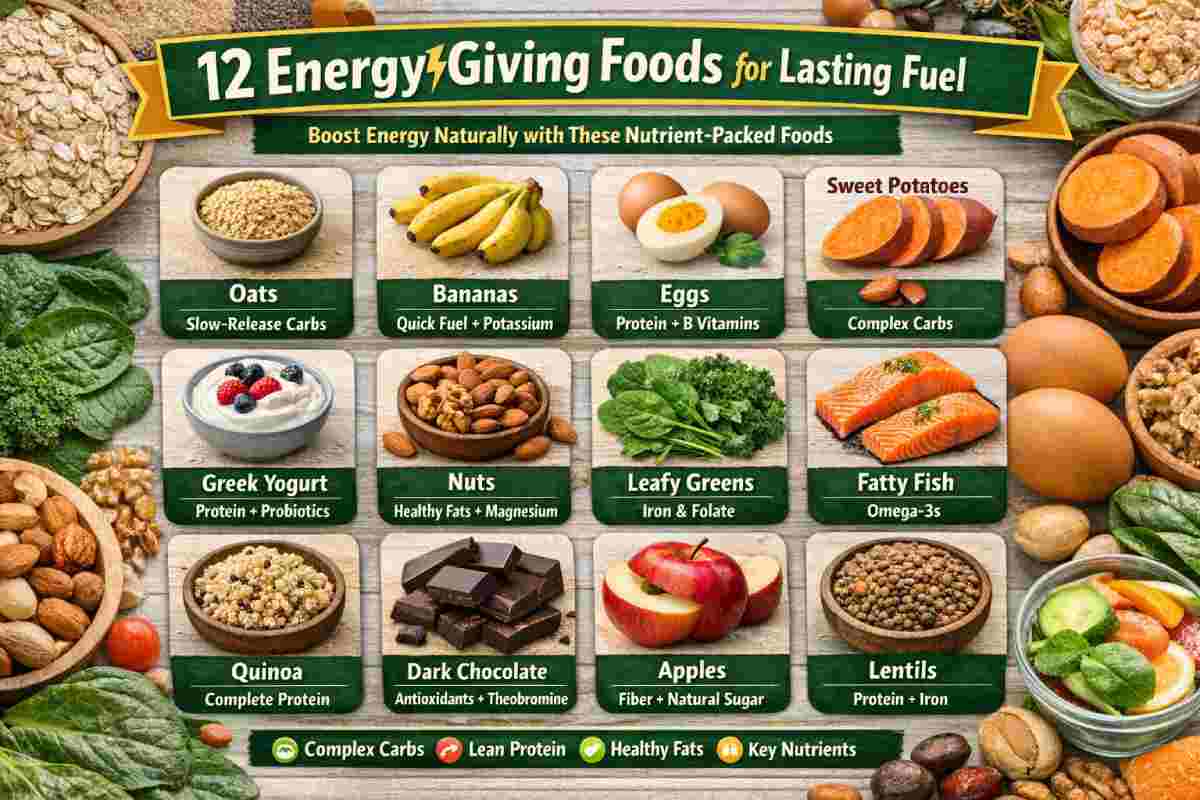
Most articles treat energy foods as simple lists; this guide explains how foods influence real cellular energy through blood sugar stability, nutrient metabolism, and mitochondrial function, helping readers choose foods that provide sustained energy instead of temporary spikes.
Many people searching for “energy giving foods” are trying to solve a daily problem: persistent fatigue, brain fog, or energy crashes during the day. Coffee and sugary snacks may provide quick stimulation, but they often lead to rapid drops in blood sugar that worsen tiredness later.
The real answer is simpler and more sustainable:
The best energy-giving foods provide slow-release carbohydrates, protein or healthy fats, and micronutrients that support cellular energy production.
Research shows that vitamins and minerals—especially B vitamins, iron, and magnesium—play a key role in energy metabolism and fatigue regulation.
This guide explains which foods actually boost energy, why they work, and how to combine them for stable energy throughout the day.
What “Energy From Food” Really Means
When people talk about “energy foods,” they usually mean foods that make them feel more alert, productive, and physically capable.
But biologically, energy refers to ATP (adenosine triphosphate)—the molecule that powers nearly every cellular function.
Your body generates ATP through metabolic pathways that convert nutrients into usable fuel.
Key Energy Pathways
| Metabolic Pathway | Main Nutrient Used | Role in Energy Production | Example Foods |
|---|---|---|---|
| Glycolysis | Carbohydrates | Produces quick cellular energy | Oats, bananas, sweet potatoes |
| Beta-oxidation | Fats | Provides long-term energy | Nuts, fish, avocado |
| Amino acid metabolism | Protein | Supports tissue repair and energy | Eggs, lentils, yogurt |
According to research summarized in the journal Nutrients, several micronutrients—including B vitamins, vitamin C, iron, magnesium, and zinc—are essential for energy metabolism and cognitive performance.
Without these nutrients, your body may consume calories but still experience fatigue or reduced stamina.
Why Some Foods Cause Energy Crashes
Not all calories are equal when it comes to energy stability.
Highly processed foods can cause rapid spikes and drops in blood sugar.
How the Energy Crash Cycle Works
| Step | What Happens | Result |
|---|---|---|
| 1 | Sugary or refined food consumed | Rapid glucose spike |
| 2 | Body releases insulin | Blood sugar drops |
| 3 | Glucose falls quickly | Fatigue and cravings |
Foods that digest slowly—especially complex carbohydrates and fiber-rich foods—release glucose gradually, providing longer-lasting energy.
12 Energy Giving Foods That Provide Sustained Fuel
Below are some of the most reliable foods for sustained energy based on nutrition science and dietitian guidance.
1. Oats
Oats are one of the most effective foods for stable, slow-release energy.
They contain soluble fiber called beta-glucan, which slows digestion and prevents blood sugar spikes.
| Nutrient | Why It Helps Energy |
|---|---|
| Complex carbohydrates | Provide gradual glucose release |
| Fiber | Stabilizes blood sugar |
| B vitamins | Support energy metabolism |
Best time to eat: Breakfast or pre-exercise meal
2. Bananas
Bananas are widely used by endurance athletes because they provide fast but balanced energy.
| Nutrient | Energy Benefit |
|---|---|
| Natural sugars | Immediate energy source |
| Potassium | Supports muscle function |
| Vitamin B6 | Helps convert food into energy |
Bananas are often recommended as a natural alternative to sports drinks during physical activity.
3. Eggs
Eggs are one of the most nutrient-dense foods for sustained energy.
| Nutrient | Role |
|---|---|
| Protein | Prevents blood sugar spikes |
| B vitamins | Convert nutrients into energy |
| Choline | Supports brain function |
Eggs also provide amino acids that help repair muscle tissue and support metabolism.
4. Sweet Potatoes
Sweet potatoes are rich in complex carbohydrates and fiber.
| Nutrient | Benefit |
|---|---|
| Complex carbs | Slow digestion for steady energy |
| Fiber | Prevents glucose spikes |
| Vitamin A | Supports cellular metabolism |
Nutrition experts often recommend them as pre-workout carbohydrates.
5. Greek Yogurt
Greek yogurt combines protein and carbohydrates, making it ideal for sustained energy.
| Nutrient | Benefit |
|---|---|
| Protein | Slows digestion |
| Calcium | Supports muscle function |
| Probiotics | Improve digestion and nutrient absorption |
Healthy digestion improves how efficiently the body extracts energy from food.
6. Nuts (Almonds, Walnuts, Cashews)
Nuts are highly energy-dense foods that provide healthy fats and essential minerals.
| Nutrient | Energy Function |
|---|---|
| Healthy fats | Long-lasting energy |
| Magnesium | Required for ATP production |
| Protein | Stabilizes blood sugar |
Magnesium deficiency has been linked to fatigue in several nutritional studies.
7. Leafy Greens (Spinach, Kale)
Leafy greens contain nutrients critical for energy metabolism.
| Nutrient | Role |
|---|---|
| Iron | Oxygen transport in blood |
| Folate | Supports cell metabolism |
| Magnesium | Helps ATP production |
Low iron intake is a common cause of fatigue, particularly in women and endurance athletes.
8. Fatty Fish (Salmon, Mackerel)
Fatty fish supports energy indirectly by improving brain health and metabolic efficiency.
| Nutrient | Benefit |
|---|---|
| Omega-3 fatty acids | Reduce inflammation |
| Vitamin D | Supports immune and metabolic health |
| B vitamins | Help convert food into energy |
9. Quinoa
Quinoa is unique among grains because it contains all nine essential amino acids.
| Nutrient | Benefit |
|---|---|
| Complete protein | Supports muscle recovery |
| Complex carbs | Sustained glucose release |
| Iron | Oxygen transport |
It is particularly valuable for vegetarian or plant-based diets.
10. Dark Chocolate (70% or Higher)
Dark chocolate provides mild stimulants and antioxidants.
| Compound | Energy Effect |
|---|---|
| Caffeine | Increases alertness |
| Theobromine | Mild stimulant |
| Flavonoids | Improve blood flow |
Small amounts may help increase mental alertness without large energy crashes.
11. Apples
Apples provide both natural sugars and fiber, which balance energy release.
| Nutrient | Benefit |
|---|---|
| Fructose | Quick energy |
| Fiber | Slows sugar absorption |
| Antioxidants | Support metabolic health |
Dietitians often recommend pairing apples with protein foods like peanut butter for better energy balance.
12. Lentils
Lentils are one of the best plant-based foods for sustained energy.
| Nutrient | Benefit |
|---|---|
| Complex carbs | Gradual glucose release |
| Protein | Stabilizes blood sugar |
| Iron | Prevents fatigue |
Legumes like lentils also help maintain stable energy levels throughout the day.
The Nutrients That Actually Control Energy Levels
Instead of focusing only on specific foods, it helps to understand the nutrients responsible for energy production.
Major Energy Nutrients
| Nutrient | Function in Energy Production | Food Sources |
|---|---|---|
| B vitamins | Convert food into ATP | Eggs, whole grains, legumes |
| Iron | Oxygen transport | Spinach, lentils, meat |
| Magnesium | Supports ATP synthesis | Nuts, seeds, dark chocolate |
| Complex carbohydrates | Provide stable glucose supply | Oats, quinoa, sweet potatoes |
Studies show these micronutrients influence energy metabolism, cognitive performance, and fatigue levels.
Best Food Combinations for Long-Lasting Energy
Eating foods in isolation can sometimes cause energy spikes.
The most effective strategy is combining nutrients strategically.
Why Food Pairing Works
| Combination | Result |
|---|---|
| Carbs + protein | Slower digestion |
| Carbs + healthy fats | Stable glucose release |
| Fiber + carbohydrates | Prevents blood sugar spikes |
Example Energy-Balanced Meals
| Meal | Example |
|---|---|
| Breakfast | Oatmeal + almonds + berries |
| Lunch | Quinoa bowl + vegetables + salmon |
| Snack | Apple + peanut butter |
| Dinner | Lentils + brown rice + vegetables |
These combinations help maintain steady energy for several hours.
Foods That Drain Your Energy
Some foods technically provide calories but still cause fatigue.
Common Energy-Draining Foods
| Food Type | Why It Reduces Energy |
|---|---|
| Sugary snacks | Blood sugar spike and crash |
| White bread | Rapid glucose absorption |
| Ultra-processed foods | Low nutrient density |
| Excess alcohol | Disrupts sleep and metabolism |
Replacing these foods with whole foods rich in fiber and nutrients can significantly improve daily energy levels.
Sample Daily Diet for Stable Energy
A balanced daily eating pattern helps maintain steady energy throughout the day.
| Time | Example Meal |
|---|---|
| Morning | Oatmeal with fruit and nuts |
| Lunch | Brown rice bowl with vegetables and protein |
| Snack | Yogurt with almonds |
| Dinner | Sweet potatoes, fish, and leafy greens |
This type of meal structure emphasizes whole foods, balanced macronutrients, and nutrient-dense ingredients.
Other Causes of Low Energy (Beyond Food)
Diet is important, but it is not the only factor affecting energy.
Common Non-Diet Causes of Fatigue
| Factor | Effect on Energy |
|---|---|
| Poor sleep | Reduces cognitive performance |
| Dehydration | Slows metabolic processes |
| Chronic stress | Hormonal disruption |
| Iron deficiency | Reduced oxygen delivery |
Health organizations including the Cleveland Clinic emphasize that balanced nutrition combined with sleep and physical activity is key to maintaining energy levels.
Conclusion
Energy levels are not determined by calories alone—they depend on how efficiently your body converts food into usable cellular fuel. The most effective energy-giving foods support this process by providing complex carbohydrates, high-quality protein, healthy fats, and essential micronutrients like B vitamins, iron, and magnesium.
Foods such as oats, eggs, bananas, nuts, lentils, and leafy greens work well because they deliver steady glucose release and the nutrients required for ATP production, the body’s primary energy molecule. When these foods are combined strategically—such as pairing carbohydrates with protein or healthy fats—they help prevent the blood sugar spikes and crashes that lead to fatigue.