

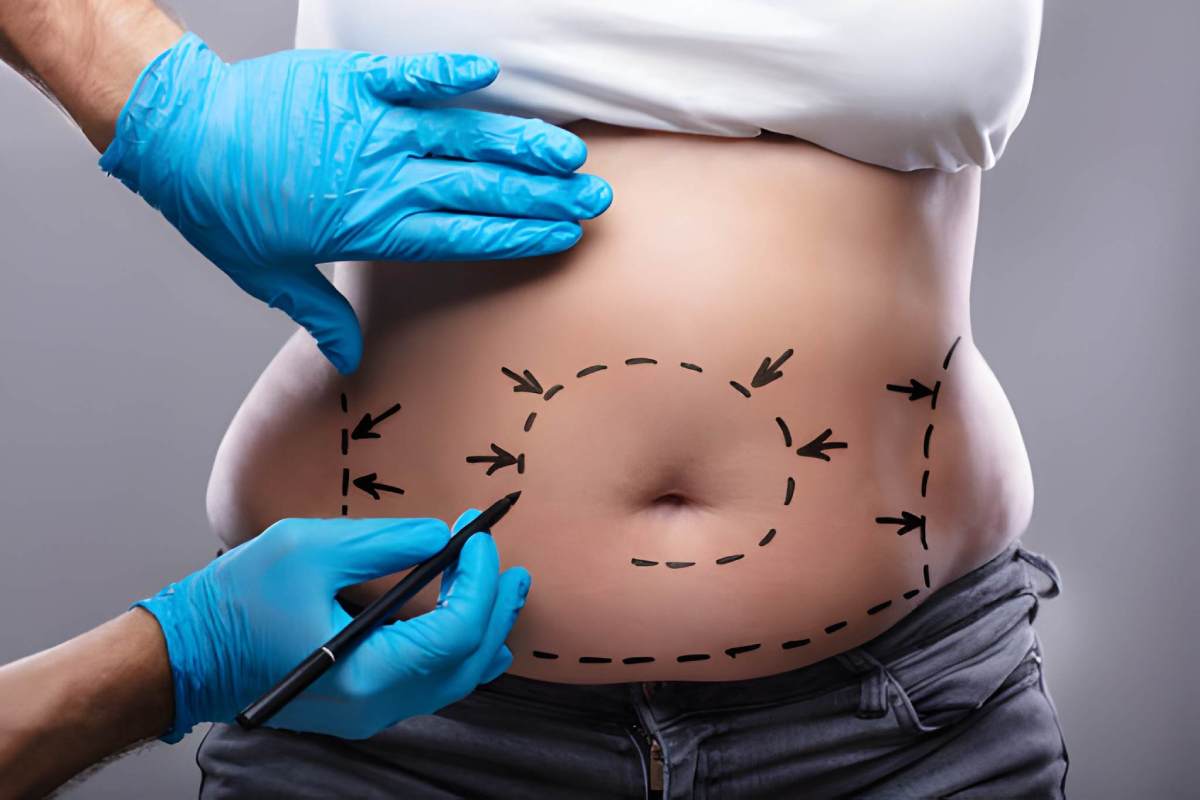
People get a tummy tuck not to lose weight, but to correct permanent skin and muscle changes that exercise and diet cannot reverse after pregnancy, weight loss, or aging.
That distinction matters, because most people start researching tummy tuck surgery with the wrong problem in mind. They assume they failed at fitness, discipline, or consistency. The frustration grows when years of workouts flatten everything except the lower abdomen. Confidence drops. Clothing fits poorly. The body no longer matches the effort invested.
The solution, when appropriate, is not “more willpower.” A tummy tuck (abdominoplasty) exists to repair physical changes that are structural, not behavioural. That is why people actually get the surgery—and why some people should not.
Key Takeaways
- A tummy tuck fixes structure, not weight.
- Loose skin and muscle separation are often irreversible without surgery.
- Reasons include physical, functional, and psychological factors.
- Not everyone is a good candidate.
- Results last only with stable weight and realistic expectations.
Why People Get a Tummy Tuck Surgery
Individuals undergo a tummy tuck surgery in order to get rid of excess skin and tighten the loose abdominal muscle that is unable to go back to its original position. This normally occurs after pregnancy, significant loss of weight or long-term stretching of the skin. It is not about losing weight, but restoring it.
When the abdomen has developed in such manners that it cannot be remedied by exercise, dieting, and time, tummy tuck is opted.
The Core Problem Most People Misunderstand
What Actually Changes in the Abdomen
| Change | What Happens | Why It Doesn’t Reverse |
| Skin overstretching | Skin expands beyond elasticity limits | Collagen fibers are permanently damaged |
| Muscle separation (diastasis recti) | Abdominal muscles pull apart | Exercise cannot reconnect separated muscle walls |
These changes occur regardless of fitness level.
Why Exercise and Diet Fail Here
Exercise strengthens muscles. It does not repair torn connective tissue. Fat loss reduces size. It does not remove loose skin.
Myth vs reality table:
| Common Belief | Medical Reality |
| “I need better core workouts” | Muscle separation requires surgical repair |
| “Fat loss will tighten skin” | Excess skin remains after fat reduction |
| “More time will fix it” | Structural damage does not self-correct |
Life Events That Trigger the Decision
After Pregnancy
Pregnancy causes hormonal shifts, muscle stretching, and skin expansion—even in athletic individuals.
A woman returns to her pre-pregnancy weight but still appears visibly pregnant due to abdominal muscle separation.
After Major Weight Loss
Massive weight loss improves health but often leaves behind heavy, hanging skin.
| Post-Weight-Loss Issue | Impact |
| Excess skin folds | Rashes, infections |
| Heavy skin movement | Exercise discomfort |
| Clothing fit problems | Emotional frustration |
Aging and Skin Quality
With age, collagen and elastin decline. Mild looseness can gradually become functionally limiting.
Functional Reasons Beyond Appearance
Many patients pursue tummy tuck surgery for comfort and function, not aesthetics.
| Functional Issue | How a Tummy Tuck Helps |
| Skin irritation | Removes overlapping skin |
| Hygiene difficulty | Eliminates deep folds |
| Core weakness | Restores muscle tension |
| Postural discomfort | Improves abdominal support |
These outcomes are frequently acknowledged by institutions like the Mayo Clinic and Cleveland Clinic.
Psychological and Emotional Drivers
After major life changes, people often experience a disconnect between effort and outcome.
Common emotional motivations include:
- Closure after pregnancy or weight loss
- Restoring body integrity
- Ending the cycle of “almost there”
Important distinction:
| Surgery Can Help With | Surgery Cannot Fix |
| Body-image alignment | Low self-worth |
| Physical confidence | Relationship problems |
| Closure after change | Unrealistic expectations |
The American Society of Plastic Surgeons emphasizes psychological readiness as a key factor.
Who Is a Good Candidate—and Who Is Not
Candidate Suitability Table
| Stable weight (6–12 months) | Actively losing weight |
| Excess skin or muscle separation | Seeking weight loss |
| Finished having children | Planning pregnancy |
| Realistic expectations | Expecting perfection |
Common Myths vs Medical Reality
| Myth | Reality |
| “It’s a weight-loss surgery” | It is a body-contouring procedure |
| “Results fade quickly” | Results last with weight stability |
| “Only women get tummy tucks” | Many men undergo it post-weight loss |
Risks, Limitations, and Trade-offs
A tummy tuck is major surgery
| Consideration | What It Means |
| Scarring | Permanent but strategically placed |
| Recovery | Weeks, not days |
| Activity limits | Temporary restrictions |
| Surgical risk | Similar to other major procedures |
Organisations such as the FDA and NIH stress informed consent and board-certified surgeons.
Decision Framework Before Consulting a Surgeon
Use this self-check before booking a consultation:
|
Question |
Yes / No |
| Is my weight stable? | |
| Do I have loose skin or muscle separation? | |
| Has diet and exercise clearly failed? | |
| Am I done having children? | |
| Am I seeking correction, not perfection? |
Mostly “yes” answers indicate a reasonable next step.
Final Perspective
Tummy tuck does not concern the perfect body. It is concerning the correction of what occurred as a result of a pregnancy, weight loss or age. It is a well-thought-out medical choice, in other words, not a cosmetic cut corner.
This article is based on peer-reviewed surgical literature, patient education standards from the American Society of Plastic Surgeons, Mayo Clinic, Cleveland Clinic, and established clinical consensus. It is for educational purposes only and not medical advice.