


Bloodborne pathogens are a critical topic in healthcare, workplace safety, and public health. These microscopic organisms, present in human blood, can cause serious and sometimes life-threatening diseases. Understanding how they spread, who is at risk, and how to prevent exposure is essential for both professionals and the general public.
This comprehensive guide explains bloodborne pathogens in detail, including their types, transmission methods, risks, prevention strategies, and legal standards.
What are Bloodborne Pathogens?
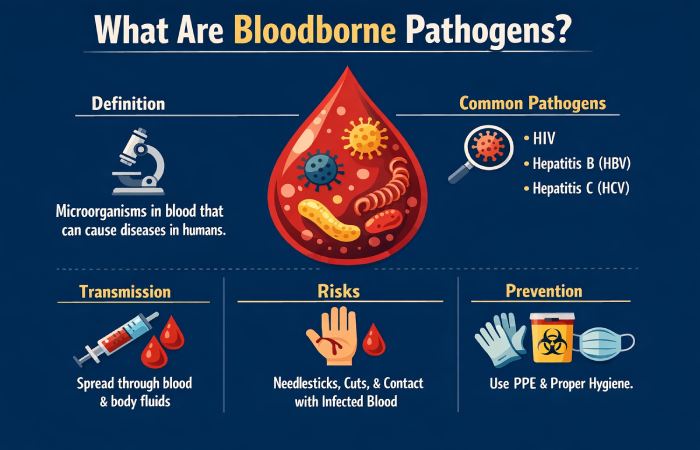
Bloodborne pathogens are infectious microorganisms found in human blood that can cause disease in humans. These include viruses, bacteria, and parasites that are transmitted through contact with infected blood or certain body fluids.
The most common and dangerous bloodborne pathogens include:
- Hepatitis B Virus (HBV)
- Hepatitis C Virus (HCV)
- Human Immunodeficiency Virus (HIV)
These pathogens are particularly concerning because they can lead to chronic illness, organ damage, or even death if untreated.
Common Types of Bloodborne Pathogens
The table below highlights the most significant bloodborne pathogens and their effects:
| Pathogen | Full Name | Main Impact on Body | Severity |
|---|---|---|---|
| HBV | Hepatitis B Virus | Liver infection, inflammation | High |
| HCV | Hepatitis C Virus | Chronic liver disease | High |
| HIV | Human Immunodeficiency Virus | Weakens immune system | Very High |
| CMV | Cytomegalovirus | Mild to severe infections | Moderate |
| Ebola | Ebola Virus | Severe hemorrhagic fever | Extremely High |
While HBV, HCV, and HIV are the most common occupational concerns, other pathogens like Ebola or syphilis can also be transmitted through blood.
How Bloodborne Pathogens Are Transmitted
Bloodborne pathogens are transmitted when infected blood or body fluids enter another person’s body. This can happen through several routes.
Primary Transmission Methods
| Transmission Method | Description | Risk Level |
|---|---|---|
| Needlestick injuries | Accidental punctures from contaminated needles | Very High |
| Cuts or abrasions | Open wounds exposed to infected blood | High |
| Mucous membrane exposure | Contact with eyes, nose, or mouth | Moderate |
| Blood transfusion (unsafe) | Use of contaminated blood products | High |
| Sexual contact | Exchange of infected bodily fluids | Moderate |
The most common occupational exposure occurs through needlestick injuries or contact with contaminated sharps.
What Are “Other Potentially Infectious Materials” (OPIM)?
Not only blood but also certain body fluids can carry pathogens. OSHA defines “other potentially infectious materials” (OPIM) as:
- Semen and vaginal secretions
- Cerebrospinal fluid
- Pleural, peritoneal, and amniotic fluids
- Saliva during dental procedures
- Any fluid visibly contaminated with blood
This means exposure risk goes beyond visible blood and includes multiple bodily fluids in specific conditions.
Who Is at Risk?
Bloodborne pathogens are most commonly associated with healthcare settings, but many professions face exposure risks.
High-Risk Occupations
| Occupation | Exposure Risk Level | Reason |
|---|---|---|
| Healthcare workers | Very High | Frequent contact with blood |
| Nurses & doctors | Very High | Use of needles and invasive procedures |
| Laboratory staff | High | Handling biological samples |
| First responders | High | Emergency exposure situations |
| Housekeeping staff | Moderate | Cleaning contaminated surfaces |
| Law enforcement | Moderate | Exposure during incidents |
According to health authorities, millions of workers are at risk due to occupational exposure to blood or infectious materials.
Signs and Symptoms of Infection
Symptoms depend on the type of pathogen involved. Some infections may remain silent for years.
General Symptoms
| Disease | Early Symptoms | Long-Term Effects |
|---|---|---|
| Hepatitis B | Fatigue, jaundice | Liver damage |
| Hepatitis C | Mild or none | Chronic liver disease |
| HIV | Flu-like symptoms | Immune system failure |
| Ebola | Fever, bleeding | Organ failure |
Early detection is crucial, especially because some infections (like Hepatitis C) may not show symptoms initially.
Prevention of Bloodborne Pathogens
Preventing exposure is the most effective way to control bloodborne diseases. Organizations like OSHA and CDC emphasize strict safety protocols.
Key Prevention Methods
| Method | Description | Effectiveness |
|---|---|---|
| Personal Protective Equipment (PPE) | Gloves, masks, gowns | High |
| Safe needle practices | Use of safety-engineered devices | Very High |
| Hand hygiene | Regular washing and sanitizing | High |
| Vaccination | Hepatitis B vaccine | Very High |
| Proper disposal | Sharps containers for needles | High |
Engineering controls, such as safer medical devices, are considered the most effective prevention method.
Universal Precautions and Standard Precautions
Universal precautions are a foundational concept in infection control.
What Are Universal Precautions?
Universal precautions mean treating all blood and certain body fluids as potentially infectious, regardless of the patient’s known health status.
Comparison Table
| Approach | Description | Usage |
|---|---|---|
| Universal Precautions | Treat all blood as infectious | Basic protection |
| Standard Precautions | Includes PPE, hygiene, and more | Modern healthcare |
| Transmission-Based Precautions | For specific diseases | Advanced care |
These precautions significantly reduce the risk of infection in healthcare environments.
OSHA Bloodborne Pathogens Standard
The Occupational Safety and Health Administration (OSHA) created a specific standard (29 CFR 1910.1030) to protect workers.
Key Requirements
| Requirement | Description |
|---|---|
| Exposure Control Plan | Written plan to reduce risk |
| Employee Training | Regular safety training |
| PPE Provision | Employers must provide equipment |
| Hepatitis B Vaccination | Free for at-risk employees |
| Post-Exposure Care | Immediate medical evaluation |
This standard ensures that employers take responsibility for minimizing exposure risks.
What to Do After Exposure
Immediate action is critical if exposure occurs.
Steps to Follow
| Step | Action |
|---|---|
| 1 | Wash area with soap and water |
| 2 | Flush eyes or mucous membranes |
| 3 | Report incident immediately |
| 4 | Seek medical evaluation |
| 5 | Follow post-exposure prophylaxis (PEP) |
Quick response can significantly reduce the risk of infection.
Importance of Vaccination
Vaccination is one of the most effective tools against bloodborne diseases.
Key Vaccines
| Vaccine | Protects Against | Availability |
|---|---|---|
| Hepatitis B Vaccine | HBV | Widely available |
| HIV (No vaccine yet) | — | Preventive drugs available |
| Hepatitis C | No vaccine | Treatment available |
The Hepatitis B vaccine is highly effective and recommended for all at-risk individuals.
Global and Public Health Perspective
Bloodborne pathogens remain a global concern, especially in regions with limited healthcare infrastructure. Unsafe medical practices, lack of sterilization, and inadequate screening of blood products contribute to higher transmission rates.
Organizations such as the Centers for Disease Control and Prevention (CDC) and World Health Organization (WHO) continue to promote awareness, vaccination, and safe practices worldwide.
Final Verdict
Bloodborne pathogens are invisible yet dangerous microorganisms that pose serious health risks, especially in occupational settings. They are primarily transmitted through contact with infected blood and body fluids, with diseases like Hepatitis B, Hepatitis C, and HIV being the most common threats.
Prevention remains the most powerful defense. By following universal precautions, using protective equipment, practicing safe handling of sharps, and ensuring proper training, the risk of exposure can be significantly reduced.
In today’s world, awareness and education about bloodborne pathogens are not just important for healthcare professionals—they are essential for everyone.