

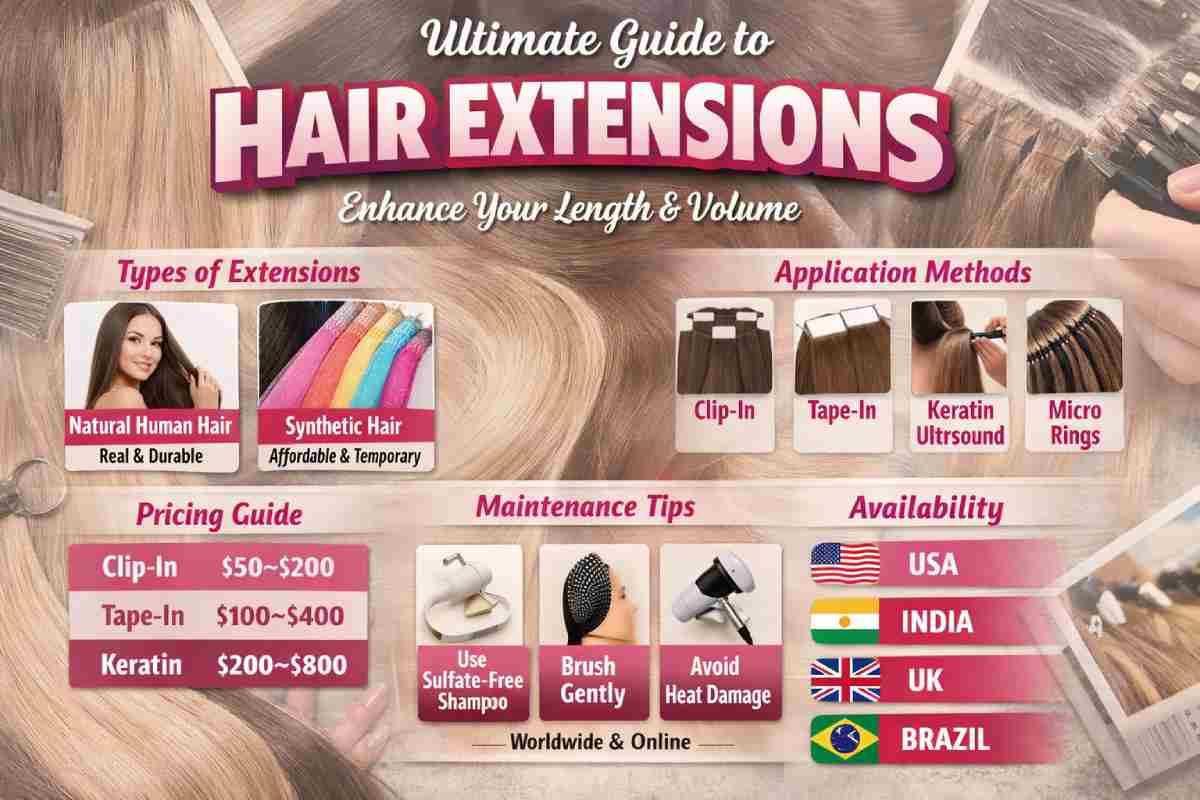
Hair extensions, often referred to as hair integrations, are widely used to add length, volume, and versatility to natural hair. They have become an essential part of modern beauty routines, helping individuals achieve fuller, longer, and more styled hair instantly. Whether made from natural human hair or synthetic fibers, extensions can dramatically transform your look when chosen and maintained correctly.
While synthetic options exist for affordability, most professionals strongly recommend natural hair extensions, especially REMY hair, because they look more realistic, last longer, and allow for heat styling just like your own hair.
What Are Hair Extensions?
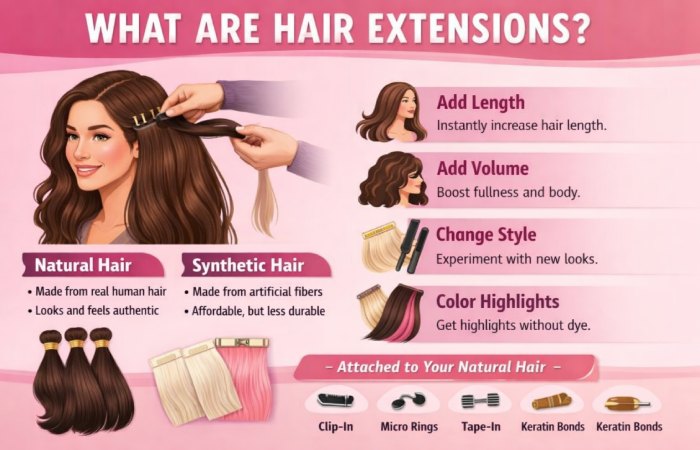
Hair extensions are strands of real or artificial hair that are attached to your natural hair using different methods. They can enhance your hairstyle by increasing volume, adding length, or introducing highlights without chemical processing.
Natural hair extensions stand out because the cuticles are aligned in the same direction, which reduces tangling and provides a smoother finish. Synthetic extensions, on the other hand, are manufactured fibers designed to mimic real hair but with limited styling capabilities.
Types of Hair Extensions
Natural Hair Extensions
Natural hair extensions are made from real human hair, often sourced from countries like India and Brazil. These extensions are soft, durable, and blend seamlessly with your natural hair. They can be washed, styled, and even colored (though lightening is limited).
Curtain or weft extensions and straight bundles are among the most popular formats. Their higher price reflects their superior quality and longevity.
Synthetic Hair Extensions
Synthetic extensions are made from fibers such as kanekalon and are designed for temporary use. They are ideal for quick style changes or occasional wear. However, they cannot withstand high heat and tend to tangle more easily over time.
Natural vs Synthetic Extensions
| Feature | Natural Hair Extensions | Synthetic Hair Extensions |
| Appearance | Highly realistic | Slightly artificial |
| Styling Flexibility | Full heat styling | Limited styling |
| Longevity | Long-lasting | Short-term use |
| Cost | Expensive | Budget-friendly |
| Maintenance | Moderate | Low |
Methods of Applying Hair Extensions
Different application techniques are available depending on hair type, lifestyle, and desired results. Some methods are temporary, while others are semi-permanent and require professional help.
Clip-in extensions are among the easiest options. They can be attached and removed at home, making them ideal for special occasions. Woven or sew-in extensions involve braiding the natural hair and stitching the extensions into it, offering a more secure and long-lasting result.
Micro ring extensions use tiny rings to attach hair strands without glue or heat, making them reusable and relatively gentle on natural hair. Tape-in extensions are another popular choice due to their flat structure, which makes them almost invisible and comfortable to wear.
Ultrasound keratin extensions represent one of the most advanced techniques. Instead of using heat, ultrasound technology bonds keratin to the hair, making the extensions safer and more suitable for fine hair. This method is highly recommended in professional salons because of its durability and natural finish.
Staple extensions, although available, are less common today due to their bulkiness and maintenance difficulty.
Comparison of Application Techniques
| Method | Duration | Reusability | Suitability |
| Clip-In | Daily use | High | Temporary styling |
| Sew-In | 6–8 weeks | Medium | Thick hair |
| Micro Ring | 2–3 months | High | Natural appearance |
| Tape-In | 6–8 weeks | High | Volume and length |
| Keratin Ultrasound | 3–5 months | Low | Fine or thin hair |
Minimum Hair Length Required
Hair extensions can be applied even to short hair. A minimum length of around 2–3 cm is usually enough, depending on the method used. Rather than focusing only on length, many stylists use extensions to add volume, shape, or layered styles such as fringes or asymmetrical cuts.
Hair Extension Maintenance
Maintaining extensions requires more care than natural hair because they do not receive nutrients from the scalp. Proper care ensures longevity and keeps them looking smooth and healthy.
A gentle hair routine is essential. Using a sulfate-free shampoo helps preserve the texture, while conditioning and weekly masks keep the hair hydrated. Heat protectant products are important when styling with tools.
Brushing should always be done on dry hair using a soft or loop brush to prevent breakage. Extensions are often coated with a shine-enhancing layer during manufacturing, which fades after a few washes, making regular conditioning even more important.
Maintenance Routine Overview
| Care Step | Frequency | Purpose |
| Washing | 2–3 times/week | Keeps hair clean |
| Conditioning | Every wash | Prevents dryness |
| Hair Mask | Weekly | Deep nourishment |
| Brushing | Daily | Avoid tangling |
| Heat Protection | Before styling | Prevents heat damage |
Origin of Hair Extensions
Most natural hair used in extensions comes from countries like India, Brazil, and parts of Southeast Asia. India is one of the largest exporters due to its wide variety of natural hair textures and colors.
Synthetic fibers like kanekalon are commonly used for braiding styles and specific hair textures, especially in protective hairstyles.
How Long Do Hair Extensions Last?
The lifespan of hair extensions depends on the type and how well they are maintained. Natural REMY hair extensions can last between three to five months, while reusable extensions may last up to eight months. Synthetic extensions typically last for a shorter period, often one to two months.
Pricing of Hair Extensions
The cost of hair extensions varies based on quality, length, and application method. Natural extensions are more expensive due to their durability and realistic appearance, while synthetic options are more affordable.
Pricing Table
| Extension Type | Price Range (USD) | Price Range (INR) |
| Clip-In | $50 – $200 | ₹4,000 – ₹16,000 |
| Tape-In | $100 – $400 | ₹8,000 – ₹32,000 |
| Keratin Extensions | $200 – $800 | ₹16,000 – ₹65,000 |
| Sew-In | $150 – $500 | ₹12,000 – ₹40,000 |
| Synthetic Extensions | $20 – $100 | ₹1,500 – ₹8,000 |
Reviews and User Experience
Hair extensions are generally well-received by users worldwide due to their instant transformation benefits. Most users appreciate the added volume and styling flexibility. However, feedback also highlights the importance of proper installation and maintenance.
User Ratings Summary
| Feature | Rating (Out of 5) |
| Appearance | 4.8 |
| Comfort | 4.2 |
| Durability | 4.5 |
| Value for Money | 4.0 |
Country-Wise Availability
Hair extensions are widely accessible across different regions, with varying popularity depending on local trends and hair types.
Availability Table
| Country | Availability Level | Common Types |
| India | High | Natural, clip-in |
| USA | Very High | Tape-in, keratin |
| UK | High | Remy extensions |
| Brazil | High | Natural textured hair |
| UAE | Medium | Premium extensions |
Where to Buy Hair Extensions
Hair extensions can be purchased both online and offline. Online platforms provide a wider selection and competitive pricing, while physical stores and salons offer professional guidance and customization.
Store Options Comparison
| Store Type | Advantages | Limitations |
| Online | Variety and affordability | No physical inspection |
| Salon | Expert consultation | Higher cost |
| Retail Stores | Immediate availability | Limited options |
Final Verdict
Hair extensions are a versatile and effective solution for enhancing hair length and volume. While synthetic extensions can serve short-term needs, natural REMY hair extensions remain the best option for long-term use due to their superior quality and natural appearance.
Choosing the right type depends on your budget, hair condition, and styling goals. With proper care and the right application method, hair extensions can deliver a seamless, sophisticated transformation that enhances both appearance and confidence.